Feature Film Treatment

PACKETS

A Prestige Crime Drama

Written by Kevin Cunningham

"A quiet IT engineer in Silicon Valley discovers a blind spot in corporate shipping logistics. What starts as a calculated shortcut becomes a criminal empire — built with his softball teammates, fueled by an alter-ego he thought he'd buried, and aimed straight at everything he loves."

Scroll

Tone & Approach

Character-Driven Crime With Thriller Momentum

In the tradition of:

Goodfellas — voiceover, rise & fall, brotherhood
The Social Network — systemic tension, tech-world stakes
A Most Violent Year — moral pressure, quiet menace
Ozark — family vs. empire, slow-burn collapse

The film is narrated by Kevin — sometimes slipping into KC Mo mid-sentence — creating a fractured voiceover that mirrors his psychological unraveling. The audience never knows which voice they're hearing until it's too late.

Opening Monologue

Voiceover — Kevin / KC Mo

"People think the first bad decision is the one that ruins you. It's not. It's the tenth. Maybe the twentieth. The first one just feels like seeing something nobody else saw — a gap in the system, a door left open, a number that doesn't add up. And you think: I'm the only one smart enough to notice this."

"My name is Kevin Cunningham. I'm a father. An IT engineer. The guy they call when something's broken. I fix things. That's what I do."

"But growing up in West San Jose… they didn't call me Kevin. They called me KC Mo. It was just initials and a Tech N9ne track. A little swagger I hadn't earned yet. I thought I buried that kid a long time ago."

"Turns out you can't bury someone who's already inside you."

Structure

Three Acts

I The Foundation

West San Jose — A Quiet Kid With a Sharp Mind

Kevin Cunningham grows up in a middle-class neighborhood in West San Jose. His father teaches. His mother works at the library. His older brother Greg is everything Kevin wants to be — athletic, confident, effortless. Kevin is none of those things. He's the quiet one. The one who sits in the back and watches everybody else talk.

But Kevin notices things. He watches how people move through rooms, how they lie without lying, how systems work when nobody's paying attention. He learns people the way other kids learn sports — by studying them until he can predict what they'll do next.

His friends give him a nickname: KC Mo. Initials plus a Tech N9ne track. It makes him feel six inches taller. Bolder. Like a version of himself that hasn't happened yet. He wears the name like armor through high school — until he doesn't need it anymore.

Or thinks he doesn't.

A Talent for Systems

Kevin starts college studying nutrition. It lasts one semester. His real talent is invisible: he understands how things connect. Workflows. Networks. The logic underneath the surface. He falls into IT and rises fast.

eBay. ServiceNow. Infortech. Each job bigger than the last. He becomes the person who can walk into a broken data center at 2 AM and have it running by sunrise. The person executives trust with their infrastructure but never invite to the table.

He watches the politics. The promotions that go to the loudest voice. The bonuses that go to people who take credit for his work. He never complains. He just files it away — another thing he noticed that nobody else did.

And one day, working a late shift in a shipping bay full of server hardware, Kevin notices something else entirely. Something he can't un-see.

The Outlawz — Brotherhood Through Softball

Kevin joins a men's softball team called The Outlawz. It's beer-league — gritty, loud, competitive. The kind of team where everyone talks trash for nine innings and then buys each other drinks until midnight.

This is where he meets Nick, Ray, and Joe Joe.

Nick owns a pool cleaning business. He knows every neighborhood in the South Bay — every cul-de-sac, every gated community, every house worth knowing. Ray sells real estate and tinkers with robotics on the side. He knows which buildings are vacant, which warehouses have gaps in their camera coverage. Joe Joe knows everyone. He's the guy who walks into a bar and three people owe him money and two more owe him a favor.

They become Kevin's second family. His exhale. Tuesday nights on that diamond — it's the only place where he doesn't feel like he's performing a version of himself.

Softball becomes the heartbeat of his week. And eventually, the boardroom of his empire.

II The Rise of KC Mo

The Blind Spot

It starts with a weight discrepancy.

Kevin is processing server returns at a fulfillment center. Thousands of packages move through every day — inbound, outbound, refurbished, recycled. Nobody weighs them twice. Nobody opens the ones marked "internal transfer." The system trusts the barcode. The barcode trusts the person who printed it.

And Kevin prints barcodes.

He doesn't act right away. That's not how Kevin works. He watches. He maps the blind spots. He tracks which shipments get audited and which ones disappear into the system without a second look. He builds a mental model of every vulnerability — and then he builds a spreadsheet. Because Kevin Cunningham doesn't stumble into anything.

He engineers it.

The Architecture

The plan is elegant. Gut decommissioned hardware. Pack the empty shells with product. Route them through corporate channels — blind transfers between facilities that exist on paper but move through a network Kevin controls. Use the company's own trust infrastructure as a shield.

It requires four people. Someone who knows every street and can handle logistics. Someone who knows which buildings are dark and which routes are clean. Someone who can talk their way past anyone. And someone who can build the system and never lose his nerve.

Kevin has all four sitting in a dugout every Tuesday night.

This is where KC Mo comes back. Not as a criminal alias — not yet. But as a feeling. A posture. The version of Kevin that doesn't hesitate. The version that speaks first and speaks with certainty. The version his friends have never seen.

They notice the change before Kevin does.

Recruiting the Crew

Kevin doesn't pitch them in a backroom. He does it in pieces, over weeks, between innings.

Nick first — because Nick is loyal and broke and tired of chlorine under his fingernails. Kevin shows him just enough to say yes. Ray next — because Ray already thinks like an operator and only needs permission. Ray asks one question: "How much?" Kevin tells him. Ray doesn't ask a second.

Joe Joe is last. Not because Kevin doesn't trust him — but because Joe Joe is the variable. The wildcard. The one who hugs too hard and drinks too late and always knows a guy. Kevin needs him precisely because he's unpredictable. Joe Joe can get into places the others can't.

They trust Kevin because he's always been the one thing they can count on. The quiet one. The smart one. The one who shows up early, stays late, never talks too much. If Kevin says it works, it works.

They don't realize they're trusting KC Mo.

The Dugout Boardroom

Operations are planned between innings. Signals passed from the on-deck circle. Drop-off schedules confirmed over post-game beers that get quieter and last longer.

The softball field becomes a war room with chalk lines and cheap lights. No one suspects a thing — because who plans a criminal enterprise around a beer-league schedule?

The diamond looks the same from the outside. Clean lines. Fair play. Everybody following the rules. The chaos is underneath. Just like Kevin.

The Double Life

6:00 AM. Kevin wakes up. Coffee. Research. He checks his daughter's blood sugar — she has Type 1 Diabetes, and the numbers have to be right. He packs lunches. Drives carpool. Logs into his remote IT job supporting cancer treatment clinics. He troubleshoots access issues for nurses who are trying to save lives.

11:00 PM. KC Mo reviews the next shipment route. Confirms the window with Nick. Texts Ray a warehouse address. Tells Joe Joe to keep his mouth shut — again.

Kevin tells himself it's for his family. For his daughters. For the gap between what a good man earns and what a good life costs in the Bay Area. He tells himself it's temporary. A few runs. Enough to build a cushion.

But the money comes faster than the guilt. And KC Mo doesn't feel guilt the way Kevin does.

The two halves of him start to blur. He catches himself using KC Mo's voice in a work meeting. He catches himself being Kevin on a drop.

He's losing the seam between them.

The Cracks

A package goes missing — one Kevin can't account for. A shipping audit gets scheduled two weeks early. Nick calls at 3 AM, panicking about a car that's been parked outside his house for two days. Ray starts freelancing side deals Kevin didn't approve. Joe Joe tells a story at a barbecue that gets a little too close to the truth.

Kevin's anxiety — the quiet kind, the kind that lives behind his ribs — starts screaming. He can't sleep. He rechecks routes at 4 AM. He drives past drop locations just to make sure they're clear. He starts snapping at his daughters and hating himself for it.

He built a perfect system. But the people inside it are human. And humans crack.

III Collapse

The Investigation

A routine corporate compliance review flags a pattern Kevin missed. Not a big one — a timestamp. Two shipments that moved through the same corridor eight minutes apart when the system says they should have been twelve hours apart.

It's the kind of thing a machine catches and a person ignores. Except this time, someone doesn't ignore it.

Kevin finds out on a Tuesday — right before a game. He plays seven innings with the knowledge that his system has a leak. He goes 3-for-4 at the plate. Nobody notices anything wrong.

That's the terrifying part. Nobody ever notices.

The Brotherhood Fractures

Kevin calls an emergency meeting. Not at a bar. Not at someone's house. At the empty softball field, 11 PM, lights off.

Nick wants out. He's shaking. He says he hasn't slept in a week. He says he saw his kids' faces every time he closed his eyes and all he could think about was what happens to them if he doesn't come home.

Ray wants more. He's already done the math on the next quarter. He has contacts who can triple their volume. He doesn't want to stop — he wants to scale.

Joe Joe is drunk. He says everything is fine. He says Kevin worries too much. He says nobody is watching them.

Kevin stands at home plate in the dark and realizes he's surrounded by three men he recruited — and not one of them is on the same page. The crew that was forged in loyalty is fracturing over fear and greed and ego.

The brotherhood was real. But it wasn't built for this.

Internal Collapse

Kevin's anxiety spiral hits full speed. He can't eat. He stares at his phone waiting for a notification that never comes — or that always comes. He checks his daughter's glucose monitor every fifteen minutes, not because the numbers are wrong, but because it's the one thing he can still control.

He starts talking to KC Mo in the mirror. Not as a character — as a real conversation. "You got us into this." "No. You needed me." "I don't need you anymore." "Then why are you still asking?"

Kevin Cunningham wanted to provide for his family. KC Mo wanted to prove he was the smartest person in every room. They were never the same person. And they can't coexist anymore.

The Implosion

Everything Kevin built collapses the way well-engineered things collapse — not with an explosion, but with a sequence. One failure triggers the next, and the next, and each one was supposed to be accounted for but wasn't. Because the system was built for data, not for people. And people are the variable Kevin could never fully control.

The consequences land. Not all at once. Not dramatically. They land the way real consequences land — in phone calls, in silences, in the look on someone's face when they realize what you've done.

The Ending

The ending is quiet. No gunfire. No car chase. No courtroom monologue.

Kevin sits in the dugout of the empty softball field at dusk. The chalk lines are fading. The lights are off. The scoreboard is blank. He's alone — truly alone — for the first time since KC Mo came back.

He pulls out his phone. Opens his daughter's glucose app. The numbers are steady. She's okay. She doesn't know any of this happened. She doesn't know who KC Mo is. She just knows her dad makes her lunch every morning and checks her blood sugar before bed.

Kevin Cunningham stares at the empty diamond. The place where it all started. The place where he recruited his brothers, planned his empire, and lost himself.

The final voiceover:

"Every system has a blind spot. I spent my whole career finding them. Exploiting them. Fixing them. The one I never found was mine."

Cut to black. The sound of a softball hitting a chain-link backstop. Then silence.

Characters

The Crew

Kevin Cunningham / KC Mo

Protagonist

  • Quiet, brilliant IT engineer with 14 years in enterprise tech
  • Devoted father — his oldest daughter lives with Type 1 Diabetes
  • Systems thinker who sees patterns before problems
  • Anxiety-driven overthinker — his greatest weapon and his fatal flaw
  • KC Mo is the confident alter-ego that rewired his childhood and never fully left
  • The line between Kevin and KC Mo erases as the operation grows

Nick

The Logistics Man

  • Owns a pool cleaning business — knows every neighborhood
  • Talkative, hard on himself, genuinely good-hearted
  • The most loyal and the most afraid
  • Cracks under pressure — becomes the conscience of the crew

Ray

The Operator

  • Real estate agent by day, robotics hobbyist by night
  • Smooth talker — knows properties, routes, and blind spots
  • Sees the operation as a business and wants to scale it
  • Gets greedy — starts freelancing without Kevin's approval

Joe Joe

The Wildcard

  • Funny, magnetic, knows every doorman and bartender in the valley
  • Loyal to a fault — would take a bullet for Kevin
  • Talks too much, drinks too late, trusts too many people
  • Becomes the liability that lights the fuse

Scene Outline

Beat Sheet

Cold Open

Act I — The World Before

Act II — The Rise

Act III — The Fall

Final Frame

Taglines

Poster Concepts

"Every system has a blind spot."
"He built the system. His alter-ego broke it."
"Some packets carry more than data."
"Two names. One collapse."
"The game was never just a game."
"You can't bury someone who's already inside you."

A Personal Statement

I Didn't Just Write This Story.
I've Lived the World It Comes From.

I'm not a Hollywood writer. I'm not an actor — not yet. I'm an IT engineer from San Jose who has spent 14 years inside the machine this story is about. Data centers. Server rooms. Shipping floors. Badge-access corridors where pallets of hardware move at 3 AM and nobody asks questions.

That world is in my hands. I've racked the servers. I've processed the returns. I've seen the weight discrepancies and the internal transfers that exist in a gray space between oversight and assumption. I didn't research this world for a screenplay — I lived in it every day for over a decade.

The character of Kevin isn't based on me. He is me — the quiet part. The part that shows up early, fixes what's broken, and goes home without anyone saying thank you. The part that watches people get promoted for work I did. The part that sees every vulnerability in a building and has the discipline not to act on it.

What I bring isn't performance — it's recognition.
The way Kevin walks through a data center. The cadence of his keystrokes. The specific way an engineer holds a shipping label up to the light to check a barcode. The body language of a man compartmentalizing a double life while checking his daughter's blood sugar. You can't learn that in an acting class. You either know it or you don't.

I wrote PACKETS because the story wouldn't leave me alone. I've carried it for years — through late shifts and early mornings, through the anxiety that comes from being competent in a system that doesn't care about competence. Every scene in this treatment comes from something I saw, felt, or overheard in a world that Hollywood has never accurately put on screen.

I'm not asking to be handed anything. I'm asking for a conversation. A screen test. A chance to prove that the man who wrote this story is the same man who should tell it on camera — with the kind of grounded, understated truth that makes an audience lean forward and hold their breath.

I believe in this project the way you can only believe in something you've carried inside you for years. And I'm ready.
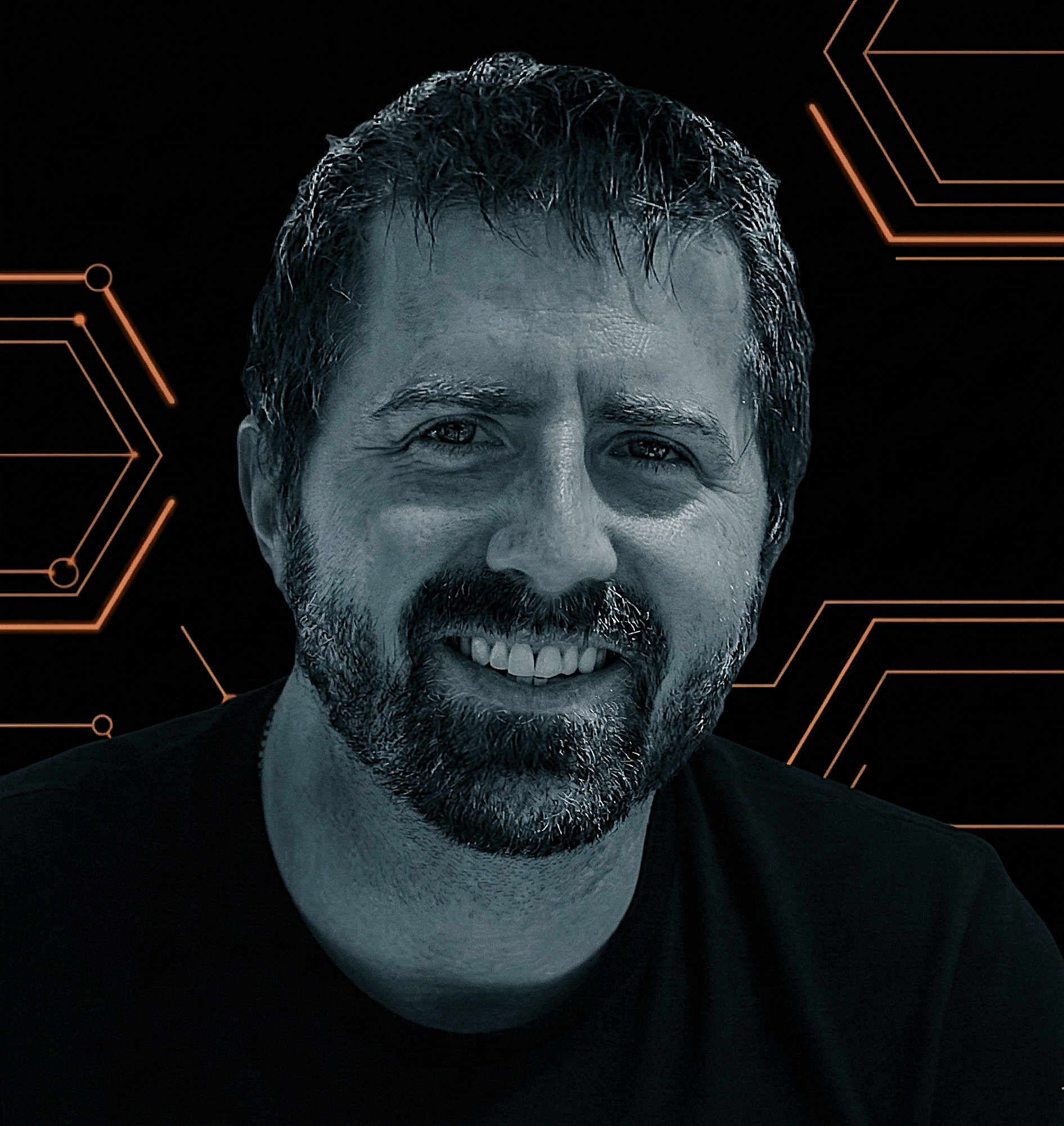
I'll do the rest. Just give me the shot.

(408) 406-7900 — call or text. I'm ready to talk.

Written By

Kevin Cunningham — writer and creator of PACKETS

Kevin Cunningham

"Just a man with a story that won't let go."

(408) 406-7900

Download Full Screenplay (PDF)

This treatment is submitted for consideration as a feature film project.
All rights reserved. © 2025 Kevin Cunningham.